A healthy smile does more than improve appearance—it supports proper chewing, speech, and overall oral health. However, teeth can become damaged over time due to decay, injury, large fillings, or normal wear. When a tooth becomes weak or cracked, dentists often recommend a dental crown to restore strength and function.
Dental crowns are one of the most reliable restorative treatments in modern dentistry. They are designed to cover and protect a damaged tooth while restoring its natural shape, size, and appearance. With advancements in dental technology, crowns today look incredibly natural and can last many years with proper care.
For patients dealing with weakened or broken teeth, this treatment provides both functional and aesthetic benefits. Many people visit a Cosmetic Dentist Peabody residents trust to restore damaged teeth while maintaining a natural-looking smile.
What Is a Dental Crown?
A dental crown is a custom-made cap placed over a damaged or weakened tooth. It fully covers the visible portion of the tooth above the gumline, protecting it from further damage.
Crowns are often recommended when a tooth:
-
Has a large cavity that cannot support a filling
-
Is cracked, chipped, or worn down
-
Has undergone a root canal
-
Needs protection after a large filling
-
Requires cosmetic improvement for discoloration or shape
Crowns help preserve the natural tooth structure while restoring its strength and appearance.
How Dental Crowns Restore Teeth
Dental crowns serve several important purposes in restorative and cosmetic dentistry. They reinforce weakened teeth and improve the overall look of your smile.
1. Strengthening a Weakened Tooth
When a tooth becomes fragile due to decay or fractures, a crown acts like a protective shield. It distributes the pressure of biting and chewing evenly, preventing the tooth from breaking further.
2. Restoring a Broken or Chipped Tooth
Accidents, sports injuries, or biting hard foods can lead to chipped or broken teeth. A crown rebuilds the tooth’s shape, restoring both function and aesthetics.
3. Protecting Teeth After Root Canal Treatment
Teeth that have undergone root canal therapy can become brittle. A crown protects the tooth and helps it function normally again.
4. Improving the Appearance of Teeth
Crowns are also used for cosmetic purposes. They can correct:
-
Severely stained teeth
-
Misshapen teeth
-
Uneven or worn teeth
Patients who visit a Cosmetic Dentist Peabody patients rely on often choose crowns to enhance both durability and smile aesthetics.
Types of Dental Crowns Used in Modern Dentistry
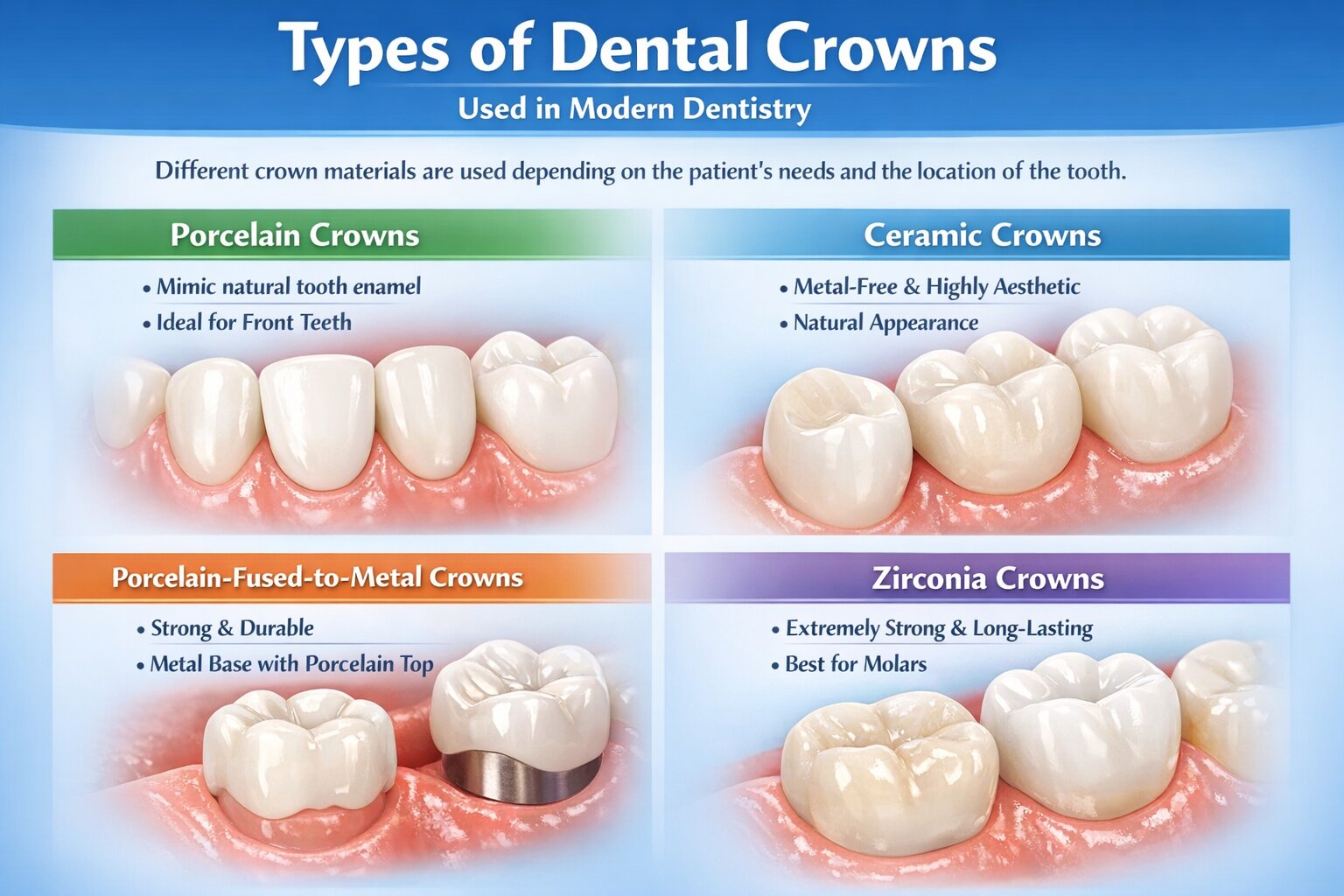
Different crown materials are used depending on the patient’s needs and the location of the tooth.
Porcelain Crowns
Porcelain crowns are popular because they closely mimic natural tooth enamel. They blend well with surrounding teeth and are commonly used for front teeth.
Ceramic Crowns
Ceramic crowns are highly aesthetic and metal-free, making them ideal for patients seeking a natural look.
Porcelain-Fused-to-Metal Crowns
These crowns combine the strength of metal with the appearance of porcelain. They are durable and suitable for back teeth.
Zirconia Crowns
Zirconia crowns are extremely strong and long-lasting. They are often recommended for molars where chewing pressure is highest.
A dental professional will recommend the most suitable option based on durability, aesthetics, and the tooth’s location.
The Step-by-Step Process of Getting a Dental Crown
Understanding the treatment process helps patients feel more comfortable about the procedure.
Initial Consultation
Your dentist begins with a thorough examination of the tooth. Digital X-rays may be taken to evaluate the structure of the tooth and surrounding bone.
Tooth Preparation
The damaged tooth is carefully reshaped to create space for the crown. This ensures the crown fits naturally and comfortably.
Impression or Digital Scan
A precise impression or digital scan is taken to create a custom crown that fits perfectly with your bite.
Temporary Crown Placement
While the permanent crown is being created in a dental lab, a temporary crown is placed to protect the tooth.
Final Crown Placement
Once the permanent crown is ready, it is securely bonded to the prepared tooth. The dentist adjusts the bite to ensure comfort and proper alignment.
Patients visiting a Cosmetic Dentist Peabody community members trust often benefit from advanced digital scanning technology, which improves precision and comfort during the process.
Benefits of Dental Crowns
Dental crowns offer several advantages beyond simply fixing a damaged tooth.
Key benefits include:
-
Restores natural tooth shape and function
-
Protects weak teeth from further damage
-
Improves the appearance of discolored or misshapen teeth
-
Strengthens teeth after root canal treatment
-
Provides long-lasting durability
With proper care, dental crowns can last 10 to 15 years or longer.
Source: Dental Hospital (BIDH)
Caring for Your Dental Crown
Although crowns are durable, maintaining good oral hygiene is essential to ensure longevity.
Daily Care Tips
-
Brush teeth twice daily with fluoride toothpaste
-
Floss carefully around the crown
-
Avoid chewing ice or very hard foods
-
Wear a mouthguard if you grind your teeth
-
Visit your dentist regularly for cleanings and checkups
Maintaining good oral health helps protect both the crown and the underlying tooth.
Signs You May Need a Dental Crown
Some symptoms may indicate that a crown could be beneficial.
Watch for these warning signs:
-
Persistent tooth pain while chewing
-
Visible cracks or chips in a tooth
-
Large fillings that feel unstable
-
Severe tooth discoloration
-
Sensitivity when biting down
Early evaluation can prevent more serious dental problems and preserve your natural tooth.
Common Questions Patients Ask
Are dental crowns painful?
The procedure is typically comfortable because local anesthesia is used. Most patients report minimal discomfort during the treatment.
How long does a dental crown last?
With proper oral hygiene and regular dental visits, crowns can last 10–15 years or longer.
Can a crowned tooth still get cavities?
Yes. While the crown itself cannot decay, the natural tooth underneath can develop cavities if oral hygiene is neglected.
Do crowns look natural?
Modern materials such as porcelain and ceramic closely resemble natural teeth, making crowns virtually indistinguishable from surrounding teeth.
How long does the procedure take?
The process usually takes two visits—one for preparation and one for final placement.
Why Early Treatment Matters
Delaying treatment for a damaged tooth can lead to more serious complications such as infections, fractures, or tooth loss. A dental crown can often save a tooth that might otherwise require extraction.
Seeking professional care early helps maintain oral health and prevents more complex treatments in the future.
Restoring Your Smile with Professional Dental Care
Dental crowns remain one of the most reliable solutions for restoring damaged teeth while preserving their natural function and appearance. Whether you have a cracked tooth, a large filling, or cosmetic concerns, crowns can provide long-lasting protection and aesthetic improvement.
If you are experiencing tooth damage or discomfort, professional evaluation is the first step toward restoring your smile. At Miel Dental Aesthetics Peabody, patients receive personalized care and modern restorative solutions designed to improve both oral health and confidence.
Book your appointment today to learn how dental crowns can help protect and restore your smile.