Dentures can change lives, and while they offer the possibility of a restored smile and support for everyday activities such as eating and speaking, over time, you may notice they no longer fit well and have become difficult and uncomfortable to use. Understanding why this occurs and how to remedy it is key to enjoying the long-term benefits of wearing artificial teeth.
Although they are fitted and adjusted when you are first provided with them, changes can occur over time for various reasons. The natural aging process, changes in bone structure and gum quality, and even the gradual wear and tear on the materials used leave you with loose, ill-fitting false teeth. The following are the most common reasons you may be having loose artificial teeth.
Why Do Dentures Become Loose Over Time?
Your dentures fit snugly around your gums, and in some cases, may remain that way for a long time. The following are some common reasons artificial teeth can loosen.
- Jawbone Resorption: As you age, the bone structure that supports your teeth can wear away, and your gums continue to change as well. Jawbone resorption is basically the shrinking of the bone structure, which causes false teeth to not be held snugly.
- Gums Changing Over Time: The shape and quality of your gums may be changing with age. The gums themselves can shift, which may cause your artificial teeth not to fit well or to feel a little loose or uncomfortable against your gums.
- Normal Wear & Tear: Even though dentures are extremely tough, normal day-to-day use can cause wear and tear on the material over time. Even though you look after them, there may be slight changes in the way they sit.
- Improper Fit: If your artificial teeth were not fitted properly when they were given to you, they may loosen much faster than usual. It also does not help that an improper fit can cause oral sores.
- Weight Changes: Weight loss or gain can cause your false teeth to become loose, as changes in face shape can sometimes alter the size and shape of your jawline.
- Health Conditions: Other health conditions, such as diabetes, or even medications, can affect your oral health and saliva production, causing artificial teeth to become loose if you don’t produce enough saliva, or causing swollen, sore gums that make it uncomfortable to keep them in your mouth.
How to Fix Loose Dentures
Is the instability of your dentures a source of irritation? This is a very common issue, but there are various methods you can use to get them to feel stable again. The fixes are:
- A Visit to Your Dentist: Initially, consult your trusted dentist in Peabody to gain an accurate understanding of the problem. They will examine the issue and tell you whether it can be resolved with some adjustments or if a new artificial tooth is needed.
- A Denture Reline: A denture reline works by adding extra material to the underside of the artificial teeth, so they fit snugly against your gums, which can be helpful if your gums or mouth shape have changed over time.
- Consider a Dental Implant-Supported Denture: If the looseness is due to bone resorption in your jaw, implants used as the anchor for your artificial teeth can offer a more stable, longer-lasting option.
- Use a Denture Adhesive: This method doesn’t provide a long-term solution for loose dentures, but it can be great when you need them to stay firmly in place. They work by helping your artificial teeth bond strongly to your gums.
- Make Adjustments: Over time, it is normal for your false teeth to settle, which may make them feel unstable. Small adjustments your Peabody dentist makes to the fitting will provide relief.
- Invest In A New One: The final option when all of the above fail or when your artificial teeth are severely worn is to create a new set, especially when significant changes have occurred in your mouth.
How to Maintain Your Dentures
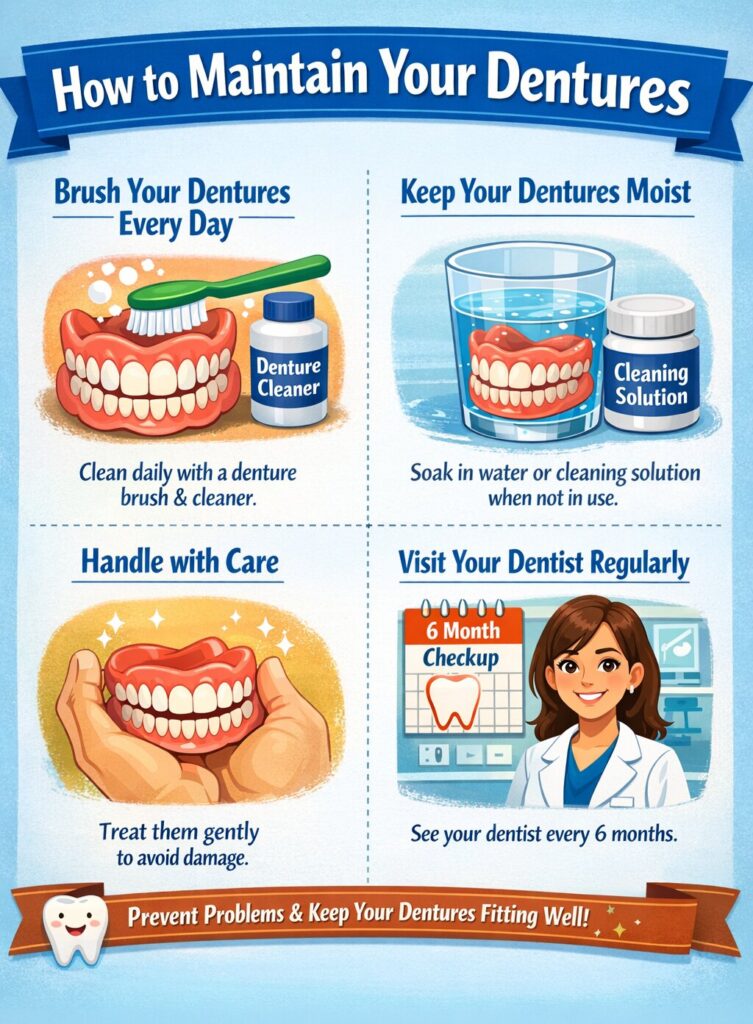
There are various steps to maintaining and caring for your false teeth to help ensure you don’t encounter problems like loose artificial teeth. Here are some things you can do to keep them in good condition:
- Brush Your Dentures Every Day: The best way to keep them clean and free of food residue and buildup is to brush them daily with a dedicated toothbrush and denture cleaner.
- Keep Your Dentures Moist: When not worn, place them in water or a cleaning solution to prevent them from drying out and becoming brittle.
- Take Care When Handling Dentures: They are relatively fragile, so treat them gently and brush them carefully to avoid breaking them.
- See Your Dentist At Regular Intervals: A visit to your dentist in Peabody every 6 months, even if your artificial teeth fit properly, is good for your dental health. This will help ensure any problems with your false teeth are spotted before they become major issues.
Signs That Your Dentures Are Loose
Certain subtle signals indicate that your oral appliances are losing their fit. Here are 7 warning signs of loose false teeth:
1. Sore or Irritated Gums
This can occur when artificial teeth slide during eating or speaking, rubbing against your gums and causing them to develop sensitive spots or lesions that can eventually lead to sores on the mouth or gum line.
2. Slurred Speech
Just as your teeth can be affected, your speech may also change when dentures become loose. You may have trouble enunciating your words clearly because your mouth isn’t positioned correctly.
3. Mouth Sores and Bleeding Gums
When artificial teeth do not fit perfectly in your mouth, the friction can cause the inside surfaces of your mouth to become sore and, in turn, start bleeding as the problem persists. It may feel like an area that just doesn’t heal when new sores form.
4. Increased Pressure and Rubbing
This sign can become very apparent if you begin to feel increased, uncomfortable pressure in your mouth or if certain areas rub persistently against your gums or other oral tissue. The parts that receive the most pressure may develop pain.
5. Difficulty Speaking Properly
As a false tooth sits firmly against your tongue when properly fitted, a loose set can make certain consonants, such as ‘s’, ‘sh’, ‘f’, and ‘v’, more challenging to articulate, creating a lisp or difficulty enunciating sounds, resulting in a fuzzy-sounding speech.
6. More Difficulty Chewing Food
Hard and chewy foods become much harder to manage when dentures are less secure. This can be an obvious cue that your artificial teeth no longer have a strong enough grip on your gums to stay steady, making it difficult to bite down on foods and often causing them to lodge beneath the ill-fitting appliances.
7. Needing More Denture Adhesive Than Before
This can be the most straightforward sign of ill-fitting artificial teeth. If you find that you need to apply more denture adhesive, or even reapply it during the day, to feel stable enough to talk and eat comfortably, it is probably an indication that you will need to be fitted for a new set of artificial teeth.
Source: The Denture Clinic Canberra
Don’t Let Loose Dentures Disrupt Your Life
Artificial teeth that are slipping cause loss of self-confidence, potential dental and oral problems, and discomfort throughout the day. It does not matter if the problem can be resolved with slight adjustments, a relining, or whether you actually need new artificial teeth; a dentist in Peabody can assist you.
A loose denture can negatively affect your appearance and your life; do not allow this problem to continue. Call us today at Miel Dental Aesthetics Peabody and schedule your dental consultation in Peabody. Finding the cause and understanding how to correct it is the primary step toward regaining the comfort of secure, properly fitted artificial teeth.
Questions People Ask About Fixing Loose Dentures
-
- How long should dentures last before they become loose?
Dentures typically last 5 to 10 years. However, they may begin to feel loose sooner if there are changes in your gums or jawbone. Regular check-ups can help ensure they remain in good condition. - Can I fix my loose dentures at home?
While denture adhesives can provide temporary relief, it’s important to visit your dentist for a proper evaluation and adjustment to ensure long-term comfort and fit. - What is the reline procedure for dentures?
Relining involves adding material to the underside of your dentures to improve their fit. It’s a quick procedure that can restore the comfort and security of your dentures. - Do implants help prevent dentures from becoming loose?
Yes, implant-supported dentures are a great solution for preventing looseness caused by jawbone resorption. Implants anchor the dentures in place for a more stable and long-lasting fit. - How often should I clean my dentures?
You should clean your dentures daily using a soft brush and denture cleaner. This helps maintain their appearance and prevents the buildup of plaque and bacteria. - What causes my dentures to hurt or become loose?
Pain and looseness in dentures can be caused by changes in your gum shape, jawbone resorption, or improper fit. A dentist can help adjust your dentures to address these issues.
- How long should dentures last before they become loose?